

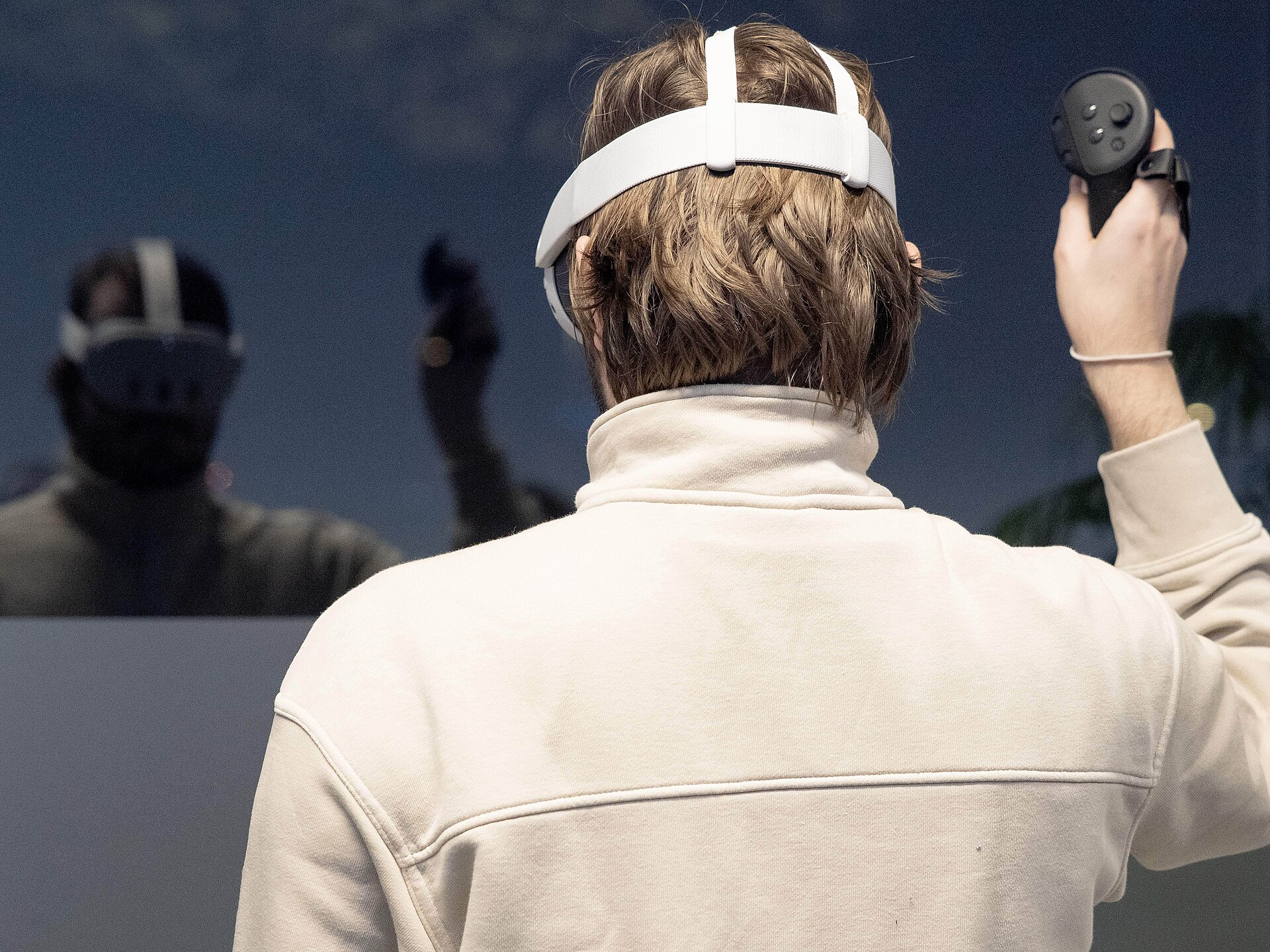
Virtuix, the company behind the Omni One omnidirectional treadmill, has partnered with Meta to sell its walking platform bundled with Meta Quest headsets, in a deal that aims to solve virtual reality’s oldest problem: how to move through a virtual world when your living room is twelve feet wide. The bundle pairs the treadmill — a dish-shaped platform on which users walk, run and crouch in any direction while staying in one place — with the headset that dominates consumer VR, and markets the combination as a single, ready-to-play system.
For readers of NewsBush, the partnership is notable because it gives a specialist hardware maker the distribution and credibility of the platform owner, and gives Meta something its headsets have always lacked: a convincing answer to locomotion that does not involve pushing a thumbstick.
How Omni One works
The Omni One is not a treadmill in the gym sense. There is no moving belt. Users stand on a smooth, concave platform wearing low-friction overshoes and a harness that holds them safely in place; their sliding steps are tracked and translated into movement in the game, while the harness allows crouching and, in supported titles, jumping. The effect, reviewers have consistently reported, is startlingly natural: you walk to walk, and your body believes it.
Bundling with Quest matters technically as well as commercially. Quest is a standalone headset, so treadmill buyers avoid the cost and cables of a gaming PC, and integration work done under the partnership should make setup — historically the fiddliest part of VR locomotion hardware — closer to plug-and-play. Details of supported titles and pricing for the bundle are covered alongside product announcements from Meta’s Quest platform.
Immersive gaming implications
Locomotion shapes what VR games can be. Thumbstick movement is convenient but famously provokes motion sickness in a significant minority of players, because the eyes report movement the inner ear does not feel. Physical walking aligns those senses, which is why treadmill users report longer, more comfortable sessions and a stronger sense of presence. It also unlocks design space: shooters, exploration games and fitness titles built around genuine movement, stamina and spatial awareness rather than teleportation.
The catalogue question remains. A treadmill needs games that support it natively, and developers need an installed base worth supporting — the classic chicken-and-egg problem of gaming hardware. A Meta-backed bundle is the strongest attempt yet to break that loop, and our technology coverage will track how many major titles ship with Omni support in the bundle’s first year.
The fitness angle
Virtuix has always sold the Omni partly as exercise equipment, and the numbers support it: an hour of active VR gaming on a treadmill can burn calories comparable to brisk walking or light jogging, accumulated by people who would not have chosen either. Bundling with Quest puts that proposition in front of the large audience already using headsets for workout apps, and raises the prospect of VR fitness moving from arm-swinging rhythm games to full-body exertion — with the heart-rate data to prove it.
There are honest caveats. The platform takes floor space even in its compact form, costs far more than the headset alone, and intense sessions mean sweat, noise and a harness to store. It is a product for enthusiasts first. But enthusiasts are how categories start: the first home VR headsets were also expensive, fiddly and bought by believers.
What the deal signals
Meta’s willingness to bundle a third party’s hardware into its consumer offer suggests a maturing platform strategy — less insistence that Meta make everything, more confidence that a rich accessory ecosystem sells headsets. For Virtuix, which spent years selling mainly to arcades and location-based entertainment, the deal is a bridge into the home market it was founded to serve.
Virtual reality has repeatedly been declared one breakthrough away from the mainstream. Walking — the most natural interface humans have — may be the least glamorous and most convincing of those breakthroughs. If the bundle sells, expect every major headset maker to want a locomotion partner of its own.
